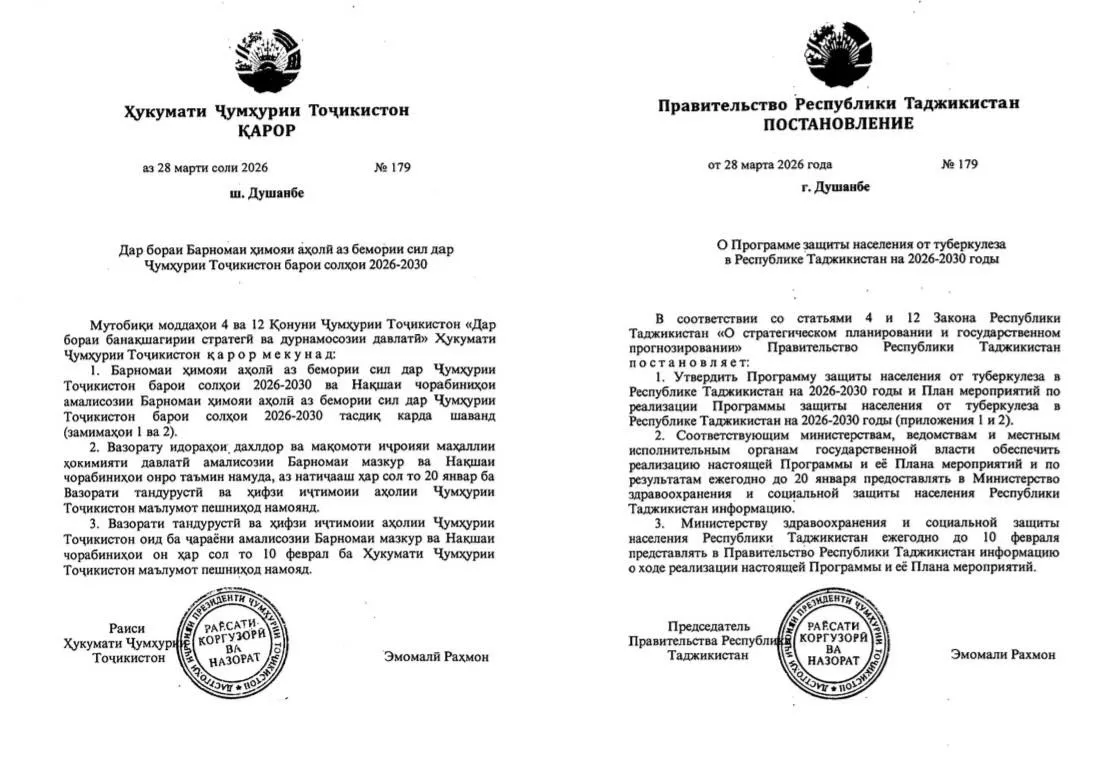
In Tajikistan, the Government has approved the National Program for the Protection of the Population from Tuberculosis for 2026–2030 and its Implementation Plan.
A key feature of these strategic documents is the expansion of a multisectoral response to tuberculosis, including the strengthened role of civil society.
The Program is guided by the following
principles:
• multisectoral collaboration involving non-governmental organizations,
• human rights protection, gender equality, and the fight against stigma and
discrimination,
• strengthening coalitions with civil society and TB-affected communities.
In addition, a dedicated section of the
Implementation Plan focuses on improving existing multisectoral coordination
among institutions involved in implementing the National TB Program. Key
priorities include:
• strengthening multisectoral collaboration and accountability for effective
implementation of the Program,
• ensuring sustainable financing for governance and reform measures under the
Program,
• engagement of civil society and TB-affected communities in the national TB
response.
It is important to note that the expanded role of civil society and communities within the Program has been made possible through sustained advocacy efforts and national dialogue at different levels.
As a result, the approved Program foresees
the involvement of civil society and affected communities in strengthening and
expanding:
• contact tracing among TB-affected populations,
• quality of screening among migrants,
• logistics for active case finding,
• monitoring and treatment adherence,
• access to preventive, diagnostic, and treatment services,
• outpatient TB care,
• implementation of people-centred treatment models,
• efforts to remove gender and legal barriers to TB services,
• improvement of the legal framework related to TB services,
• monitoring of infection control measures at community level and regular field
monitoring visits.
Furthermore, the new Program includes a revision of the existing standardized package of supportive services and an increase in funding for CSOs/NGOs engaged in TB response through social contracting mechanisms.
We extend our gratitude to our Tajik colleagues, and especially to our partners from Stop TB Partnership, Tajikistan, for their systematic advocacy efforts to strengthen multisectoral TB response and expand meaningful engagement of communities and civil society in Tajikistan, including through the regional COMBAT DR-TB project funded by Unitaid.