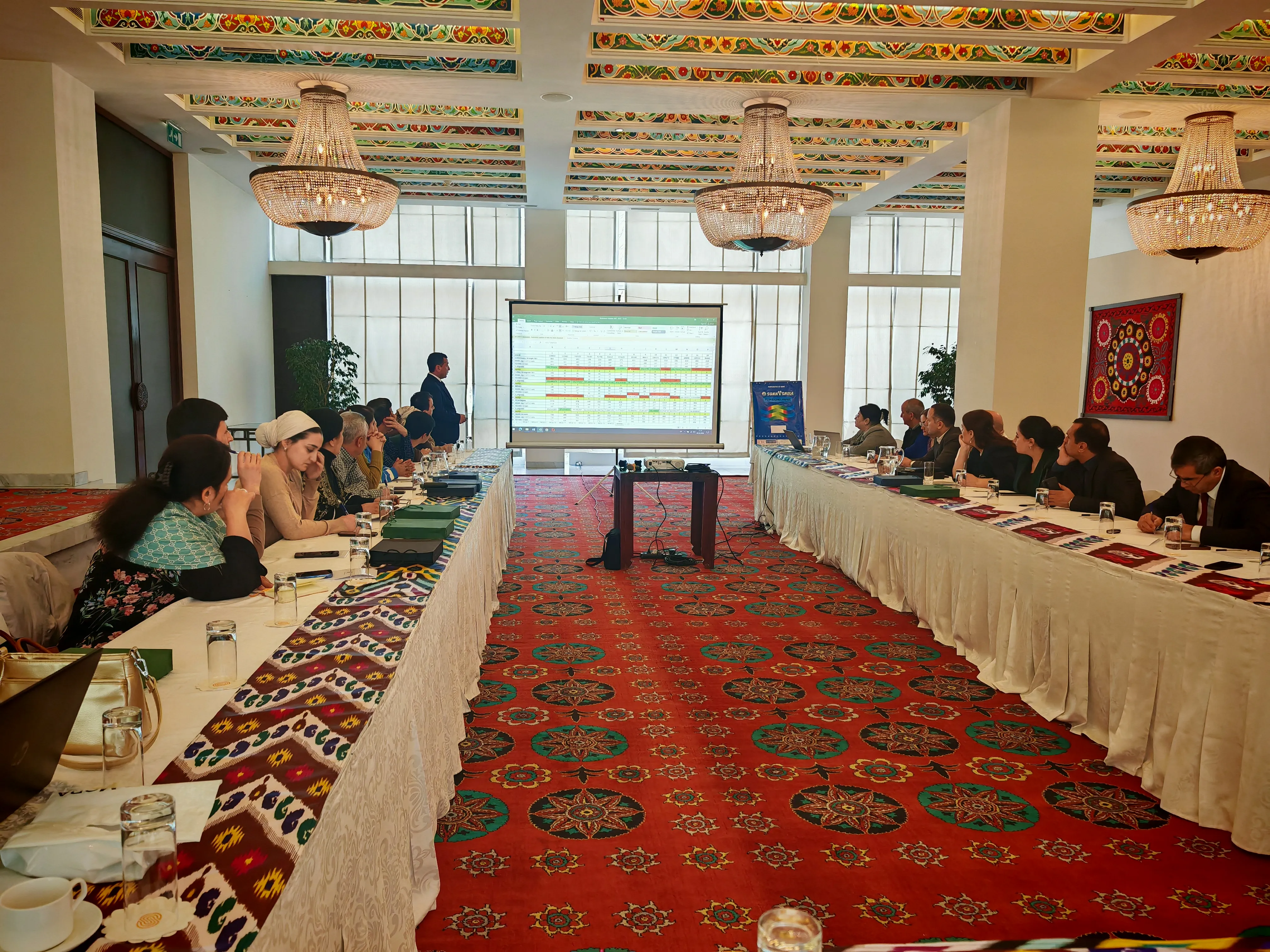
In Dushanbe, Tajikistan, representatives of relevant governmental and non-governmental organizations discussed existing challenges in combating drug-resistant tuberculosis (DR-TB) with healthcare professionals, as well as ways to address them in order to improve DR-TB treatment outcomes in the country.
The meeting of the Sector Committee on issues requiring resolution within the framework of the implementation of the “National Program for Protection of the Population from Tuberculosis in the Republic of Tajikistan for 2021–2025” brought together 40 participants. These included representatives of the National Center for Tuberculosis Protection, the Dushanbe City Health Department, the Dushanbe City Tuberculosis Center, heads of primary health care facilities in Dushanbe, representatives of the Association of Phthisiologists of Tajikistan, and civil society organizations.
During the event, organized by KNCV Tajikistan in late December within the COMBAT DR-TB project, the participants were presented with:
- An overview of the epidemiological situation of tuberculosis, achievements, challenges, and possible solutions to existing issues;
- Results of the implementation of the fluorographic screening plan among vulnerable population groups for tuberculosis in 2025, and the targeted development of a plan for fluorographic screening of vulnerable groups for 2026 in Dushanbe;
- Proposals for implementing comprehensive collaboration to identify new tuberculosis cases and monitor treatment.
“Annual meetings with specialized medical networks on tuberculosis control, supported by Unitaid and involving community representatives, contribute to the implementation of a number of strategic objectives, including improving data quality and the reliability of reporting,” noted Shodmon Khushvakhtov, Head of KNCV Tajikistan.
A comprehensive review of the epidemiological situation on TB and DR-TB serves as a key tool for evidence-based management. Information exchange during the meeting made it possible to objectively assess progress in 2025 and verify achieved results against national targets. In particular, a comparative analysis of current indicators with the global indicators of the WHO End TB Strategy was conducted, which envisage a 75% reduction in mortality and a 50% reduction in incidence by the end of 2025 compared to the 2015 baseline. Monitoring of health care coverage made it possible to assess progress towards the 90% target in such areas as access to treatment, treatment effectiveness, and the introduction of innovative diagnostic methods.
“Systematic situational analysis encourages medical institutions to improve data collection protocols, and as a result of such meetings a shared understanding of current challenges is formed, which is a critical prerequisite for effective interdisciplinary collaboration within the implementation of the national tuberculosis program,” Mr Khushvakhtov concluded.
The event was held within the framework of the interregional COMBAT DR-TB project, funded by Unitaid and coordinated in the EECA countries by the TB Europe Coalition.